 Skip to content

Galapagos Wildlife Calendar: The Complete Guide to Flora and Fauna Month-by-Month
Planning a trip to the Enchanted Isles is a dream for many, but the success of your expedition often hinges on timing. The Galapagos wildlife calendar is a complex and fascinating cycle driven by ocean currents and seasonal changes. Whether you want to see the iconic blue-footed boobies or swim with whale sharks, understanding the biological clock of the archipelago is essential. In this guide, we break down the most significant wildlife and flora events throughout the year to help you pick the perfect window for your 2026 adventure.
The Warm and Wet Season (January to May): A Tropical Transformation
From January to May, the Panama Current brings warm waters and occasional tropical showers. This is when the islands turn from a volcanic grey to a vibrant, lush green.
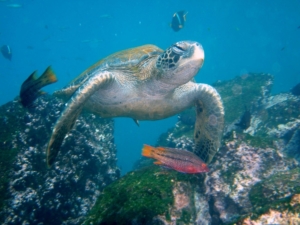
- Sea Turtle Nesting (January – March): Green sea turtles arrive at the beaches of islands like Floreana and Santa Cruz to lay their eggs. By March, if you are lucky, you might spot tiny hatchlings making their dash to the sea.
- The Blue-Footed Booby Dance (May): This is perhaps the most famous event in the Galapagos wildlife calendar. In May, the boobies begin their courtship. The males perform a highly choreographed dance, lifting their bright blue feet to impress females. North Seymour is the premier spot for this spectacle.
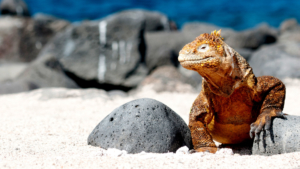
Land Iguanas and Flora: Land iguanas on Isabela Island begin their nesting season in March. Meanwhile, the flora is at its peak; the Scalesia forests and Palo Santo trees are fully leafed, creating a tropical paradise feel that is perfect for photography.
The Dry and Cool Season (June to December): The Marine Life Peak
When the Humboldt Current arrives in June, it brings cooler, nutrient-rich waters. This “upwelling” is a dinner bell for marine species and sea birds.
- Waved Albatross Courtship (April – June): While they arrive in April, their activity peaks in June on Española Island. Their “fencing” ritual with their massive yellow beaks is one of the most sophisticated displays in the animal kingdom.
- Whales and Whale Sharks (July – September): The cold currents bring massive amounts of plankton, attracting giants. The western islands, particularly the waters between Fernandina and Isabela, become a hotspot for whale watching.
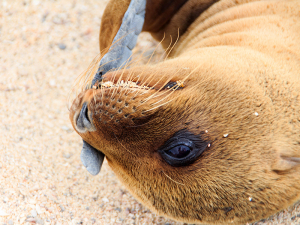
- Sea Lion Pupping Season (August – October): This is a favorite for many travelers. The beaches become nurseries. You will see “kindergartens” of sea lion pups playing in the shallows. While they are curious, remember to maintain a safe distance.
- Blue-footed Boobies and Chicks (August): By late August, those famous dances have turned into nests. You can see fluffy, white booby chicks—often looking like giant cotton balls—waiting for their parents to return with fish.
Top 3 Islands for Bird Watching
- Genovesa (Tower) Island: Known as “Bird Island” for its massive colonies of Frigatebirds and Red-footed boobies.
- Española (Hood) Island: The only place on earth where you can see the Waved Albatross nesting.
North Seymour: The best place to see the interaction between Blue-footed boobies and Magnificent Frigatebirds.
FAQs
Here are the most common questions travelers ask about Flora and Fauna
- When is the best month to see Blue-footed boobies? The peak for seeing their courtship dance is May and June, though they are present in the islands year-round.
- What is the best time for snorkeling with marine life? For large animals like whales and sharks, August to October is best due to the nutrient-rich cold currents. For clear water and warmer temperatures, January to April is ideal.
- Can I see the Albatross all year? No. The Waved Albatross is only in Galapagos from April to December. They spend the rest of the year at sea.
- Are the islands very rainy in the “wet season”? No, it usually consists of short, heavy tropical bursts followed by intense sunshine, which helps the Galapagos flora thrive.
- When do sea lions have babies? The pupping season begins in August and peaks in September and October.
Want to see the booby dance in person? Contact Columbus Ecuador today to book your wildlife expedition for the 2026 season!