 Skip to content

Looking for Amazon Rainforest Animals?
Here is the Ultimate Wildlife Checklist for Your Ecuador Trip
If you are a wildlife enthusiast, there is one place on Earth that belongs at the top of your travel bucket list: the Ecuadorian Amazon. Despite covering only a small fraction of the massive South American rainforest basin, Ecuador’s upper Amazon region—specifically areas like Yasuní National Park and the Cuyabeno Wildlife Reserve—holds some of the highest concentrations of biodiversity on the planet.
However, entering a dense, tropical jungle can be intimidating if you don’t know what to look for or how to spot it. Many travelers worry they will spend days staring at trees without actually seeing any wildlife. This guide solves that problem by detailing the most iconic Amazon Rainforest Animals you can expect to encounter, along with practical tips on how to maximize your sightings with the help of professional local guides.
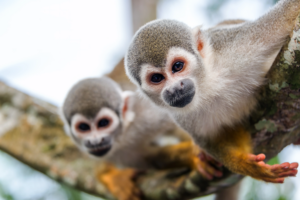
The Big Stars of the Canopy: Spotting Monkeys and Mammals
The layer of the rainforest high above the ground, known as the canopy, is a bustling highway for mammals. It is almost impossible to spend a few days at a high-quality jungle lodge without encountering multiple species of primates moving through the branches.
-
Howler Monkey: Deep, roaring vocalizations at dawn
-
Squirrel Monkey: Fast-moving, travels in massive groups
-
Pygmy Marmoset: The smallest monkey in the world
-
Capuchin Monkey: Highly intelligent tool-users
Beyond primates, lucky travelers can spot incredible arboreal Amazon Rainforest Animals such as the three-toed sloth, which moves along branches at an incredibly slow pace, perfectly camouflaged among the leaves. Spotting these creatures requires a sharp eye, which is why exploring the riverbanks in a silent, paddle-driven canoe with a native guide is the absolute best way to observe them in their natural habitat.
Masters of the Water: Pink Dolphins and Giant Otters
The rivers and blackwater lagoons of the Ecuadorian jungle are just as alive as the trees above. One of the most magical encounters you can have is catching a glimpse of the rare Pink River Dolphin breaking the surface of the water.
These highly intelligent creatures have adapted over thousands of years to navigate through flooded forest roots. Sharing the water with them are other highly active Amazon Rainforest Animals, including the Endangered Giant River Otter. Often referred to by locals as the “wolves of the river,” these otters live in noisy, highly coordinated family packs and can grow up to six feet in length, making them a thrilling sight during boat excursions.

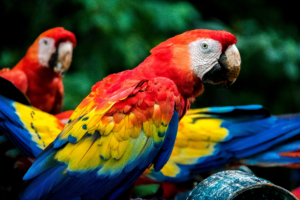
A Paradise for Birdwatchers: Macaws, Toucans, and the Prehistoric Hoatzin
For bird lovers, Ecuador is nothing short of a dream destination. The sheer volume of avian Amazon Rainforest Animals flying through the skies is staggering. From the moment the sun rises, the jungle fills with a symphony of calls.
- Scarlet and Blue-and-Gold Macaws: These large, vibrant parrots are often seen flying in pairs across the river channels during sunset.
- Channel-billed Toucans: Easily recognized by their massive, colorful bills and distinct yelping calls from the high treetops.
- The Hoatzin (Stinkbird): A bizarre, prehistoric-looking bird found near swampy lagoons that digests leaves using a unique fermentation system similar to cows.
To get the absolute best views of these magnificent flying Amazon Rainforest Animals, many premium eco-lodges feature massive observation towers built right alongside emergent kapok trees, putting you eye-to-eye with the birds at the canopy level.
How to Safely Choose the Best Jungle Adventure
To see these incredible creatures, you need to head to the right place. Choosing an unregulated tour operator can lead to disappointing wildlife sightings and unsustainable practices that harm the local ecosystem.
Our Conservation Commitment: At Columbus Ecuador, we partner exclusively with eco-conscious lodges that respect the environment and support indigenous communities. Protecting the habitats of these sensitive Amazon Rainforest Animals ensures that future generations can experience the magic of the jungle.
Whether you want to sleep in a luxury canopy suite or embark on deep-forest jungle treks, we handle all the logistics from Quito to the depths of the wild. If you are ready to check these incredible creatures off your bucket list, explore our curated jungle itineraries on our dedicated Amazon Rainforest or browse our combined wildlife packages on our Galapagos Cruises to experience two distinct wildlife worlds in one single vacation.
Frequently Asked Questions (FAQs)
Here are the most common questions travelers ask
- Is it guaranteed that I will see Amazon Rainforest Animals during my trip? While wildlife in a wild, pristine ecosystem can never be 100% guaranteed, booking a tour at a lodge deep within protected areas like Yasuní or Cuyabeno ensures an incredibly high probability of daily sightings. You are almost certain to see multiple species of monkeys, caimans, toucans, and diverse insects.
- What is the best time of day to spot wildlife in the jungle? The absolute best times for wildlife viewing are early in the morning (from 6:00 AM to 9:00 AM) and late in the afternoon (from 4:00 PM to 6:30 PM). This is when temperatures are cooler, and animals are highly active, foraging for food or moving across rivers. Night walks are also incredible for spotting nocturnal frogs, tarantulas, and owls.
- Are there dangerous Amazon Rainforest Animals that I should worry about? Creatures like jaguars, anacondas, and venomous snakes do live in the rainforest, but they are naturally afraid of humans and prefer to stay hidden deep in the bush. As long as you stay on designated trails and follow the instructions of your professional certified guide, your jungle excursion is completely safe.
- What should I pack to comfortably photograph animals in the rainforest? You should pack a camera equipped with a good telephoto zoom lens (at least 200mm to 300mm) because many animals hang out high up in the canopy. Additionally, bring high-quality binoculars, lightweight long-sleeved clothing to protect against insects, a headlamp for night hikes, and a waterproof dry bag to protect your gear from sudden downpours.
- How many days should I spend in the Amazon to get a great wildlife experience? We highly recommend a 4-day/3-night or a 5-day/4-night itinerary. The first and last days include travel time into the deep jungle, so having 2 or 3 full, uninterrupted days of exploration gives you the absolute best chance to see rare animals like river otters and pink dolphins.